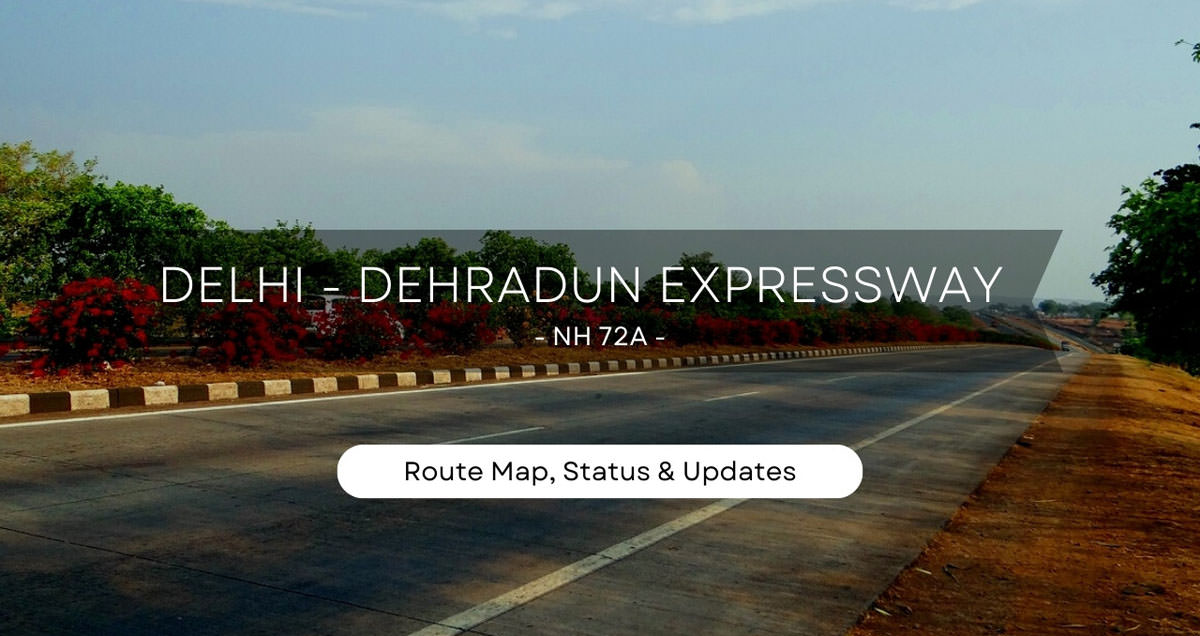
The Delhi Dehradun Expressway (NH 72A) is a major access-controlled highway project developed by the National Highways Authority of India (NHAI). The foundation stone of the project was first laid by Nitin Gadkari, Union Minister for Road Transport and Highways, on 26 February 2021, and later inaugurated again by Prime Minister Narendra Modi on 4 December 2021.
Now, in 2026, the Delhi–Dehradun Expressway is being opened in phases by Prime Minister Narendra Modi, marking a major milestone in North India’s road connectivity. Once fully operational, this expressway will significantly improve travel between Delhi and Dehradun.
This 210 km long, 6 to 12-lane expressway passes through Delhi, Uttar Pradesh, and Uttarakhand, covering key cities like Baghpat, Baraut, Shamli, and Saharanpur. Built at an estimated cost of around ₹11,963 crore, the project aims to provide faster, safer, and seamless travel.
With its partial opening, travel time between Delhi and Dehradun is already being reduced significantly, and once fully completed, the journey is expected to take just 2.5 to 3 hours.
The project also includes two important spur expressways to enhance regional connectivity:
- Saharanpur – Roorkee – Haridwar Expressway (50.7 km, 6-lane)
- Ambala – Shamli Expressway (121 km, 6-lane)
- Total Estimated Cost: ₹11,963 crore
- Total Length: 210 km
- Lanes: Up to 12 lanes (Phase 1) and 6 lanes (other phases)
- Current Status: Partially Operational (Opening in Phases - 2026)
- Owner: National Highway Authority of India (NHAI)
- Project Model: EPC (Engineering, Procurement and Construction)
Read More
How to Reach Dehradun
Delhi Dehradun Expressway Features
Update (2026): The Delhi–Dehradun Expressway is now partially operational, with key sections already open to the public. Once fully operational, the distance between New Delhi and Dehradun will be reduced from 235 km to 210 km, and the journey time is expected to come down to just 2.5–3 hours.
The main highlight of this project is its wildlife-friendly design, which includes a 12 km long elevated corridor, multiple animal underpasses including dedicated elephant underpasses, major and minor bridges, and eco-sensitive infrastructure. This makes it one of India’s most advanced wildlife-friendly highways and home to Asia’s longest elevated wildlife corridor, ensuring safe and unrestricted movement of animals.
The expressway is designed for high-speed travel, with speeds up to 100 km/h in most stretches. A closed tolling system is being implemented, allowing users to pay toll charges only for the distance traveled. The expressway is built with 113 VUP (Vehicular Under Passes), LVUP (Light Vehicular Under Passes), SVUP (Small Vehicular Under Passes), 5 ROBs, 4 major bridges, and 62 bus shelters. In addition to this, 76 km of service roads and around 29 km of elevated roads have been developed, along with 16 entry and exit points for smooth connectivity.
Delhi Dehradun Expressway Route Map
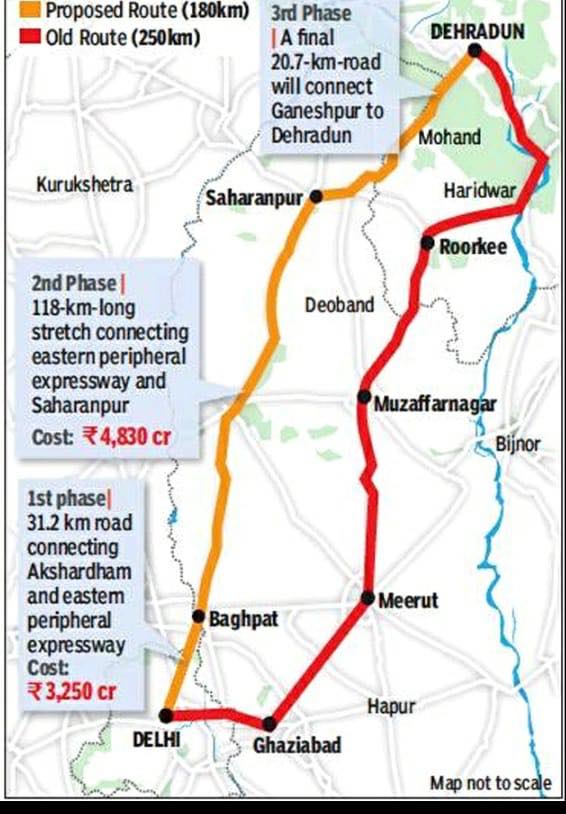
Old route:
Delhi - Ghaziabad - Meerut - Muzaffarnagar - Saharanpur - Dehradun
New route:
Delhi - Baghpat (Phase 1 – 31.2 km)
Baghpat - Saharanpur (Phase 2 – 118 km, with multiple interchanges and around 60 underpasses)
Saharanpur - Ganeshpur (Phase 3 – 40 km)
Ganeshpur - Dehradun (Phase 4 – 20.7 km, including tunnels, elevated wildlife corridor, and hill section)
Delhi - Dehradun Trains Schedule
Phases of the Project
Phase 1- The expressway begins at Akshardham, New Delhi and extends towards Baghpat. This section includes urban connectivity with multiple entry-exit points.
- Range: Akshardham (Delhi) to Baghpat (Eastern Peripheral Expressway Interchange)
- Type: Brownfield Upgrade
- Distance: ~32 km
- Lanes: Up to 12 lanes (6 express + 6 local)
Phase 2- This phase connects Baghpat to Saharanpur and is designed to improve regional connectivity with multiple interchanges and underpasses.
- Range: Baghpat to Saharanpur Bypass
- Type: Greenfield
- Distance: ~118 km
- Lanes: 6 lanes
Phase 3- This section links Saharanpur to Ganeshpur and involves upgrading existing road infrastructure.
- Range: Saharanpur to Ganeshpur
- Type: Brownfield Upgrade
- Distance: ~40 km
- Lanes: 6 lanes
Phase 4- This final phase connects Ganeshpur to Dehradun through forest areas and hilly terrain, including tunnels and elevated sections.
Update (2026): Major portions of Phase 4, including the elevated wildlife corridor near Asharodi (on the outskirts of Dehradun), are now operational and open to traffic.
- Range: Ganeshpur to Dehradun
- Type: Brownfield Upgrade
- Distance: ~20 km
- Lanes: 4 to 6 lanes
IMPACT OF THE PROJECT
- On the people - This project significantly reduces travel time and improves connectivity between Delhi and Dehradun. It offers a smoother and safer travel experience, benefiting tourists, pilgrims, and daily commuters. Improved connectivity is also expected to boost tourism and generate employment opportunities in nearby regions.
- On the environment - The expressway passes through eco-sensitive zones including Rajaji Tiger Reserve and incorporates advanced wildlife protection measures like elevated corridors and underpasses. This reduces human-wildlife conflict and helps preserve biodiversity.
- On the Real Estate - The expressway is expected to boost real estate development in regions like Baghpat, Shamli, and Saharanpur. Improved connectivity will enhance property values and promote commercial growth, including hotels, restaurants, and travel services.
Current Status
Phase 1 and Phase 4 of the Delhi–Dehradun Expressway have now been inaugurated and opened for public use by Prime Minister Modi in 2026. These sections are now operational, significantly improving connectivity and reducing travel time between Delhi, Western Uttar Pradesh, and Uttarakhand.
Under Phase 1, a 14.75 km stretch lies within Delhi, starting from Akshardham and extending up to the Loni border. This section includes five major entry and exit points at Akshardham, Gandhi Nagar–Geeta Colony, ISBT–Dilshad Garden Marg, Khajuri Pusta Marg, and Signature Bridge, ensuring smooth urban connectivity.
Under Phase 4, the expressway runs from Ganeshpur (Saharanpur district) to Asharodi near Dehradun. A 14 km elevated stretch has been developed in this section, including a 12 km long wildlife corridor — recognized as the longest elevated wildlife corridor in Asia. This eco-sensitive design allows seamless movement of wildlife while ensuring high-speed vehicular traffic.
With these phases now operational, vehicles traveling from Delhi, Meerut, and Saharanpur can directly access Dehradun via this modern expressway, making the journey faster, safer, and more efficient.