


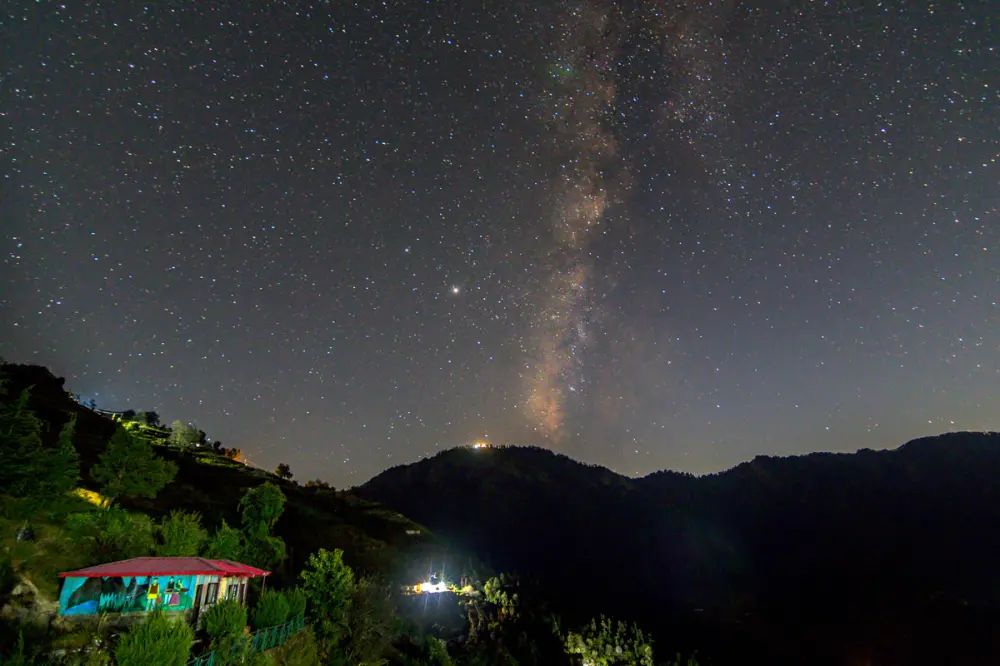
Jwarna is a high-altitude village near Kanatal in Tehri Garhwal district of Uttarakhand. Owing to its dark skies, high elevation and comparatively low light pollution, the village has become a popular destination for stargazing, Milky Way photography and astro tourism.
Located at an elevation of approximately 8,000 feet (2,400 metres), Jwarna offers favourable night-sky viewing conditions during clear-weather months. Its road connectivity from Dehradun, Rishikesh and Delhi makes it one of the easily accessible astro tourism destinations in Uttarakhand.
Clear skies between May and September provide favourable conditions for observing and photographing the Milky Way from Jwarna. Moonless nights during this period generally offer the darkest skies, making them suitable for long-exposure night photography.
Visitors may also observe satellites, constellations and occasional meteors on clear nights. During annual meteor showers such as the Perseids and Geminids, the number of visible meteors generally increases.
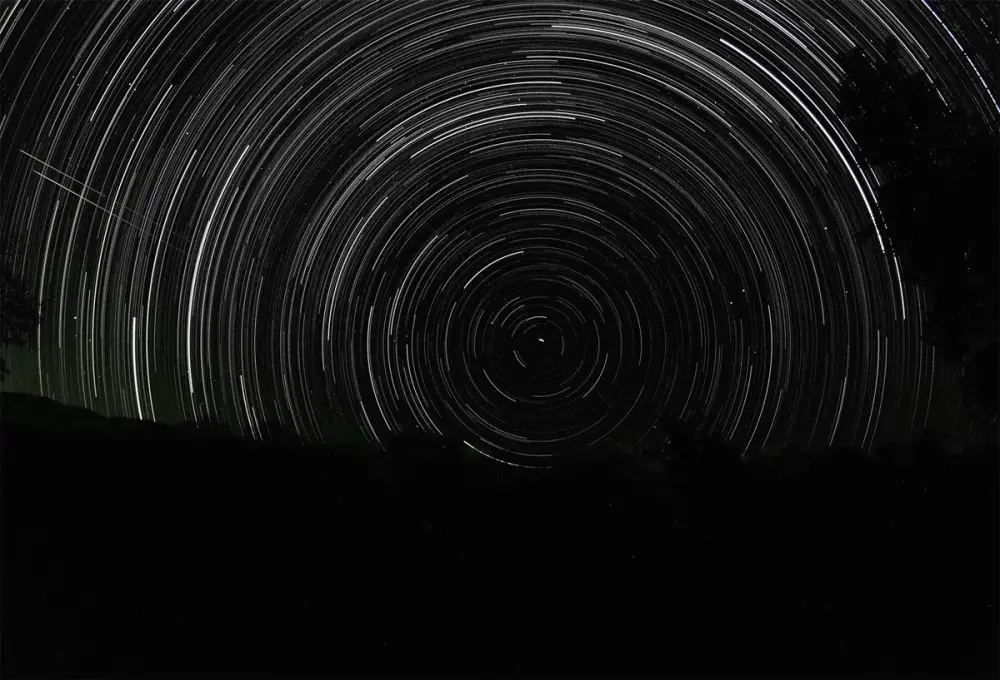
Several astronomy groups and photography communities organise seasonal workshops in Jwarna, especially during the Milky Way season and major meteor showers. These programmes generally cover camera settings, long-exposure photography, star trails and basic night-sky observation techniques.
Participants should confirm workshop schedules and organisers in advance, as events vary from year to year.
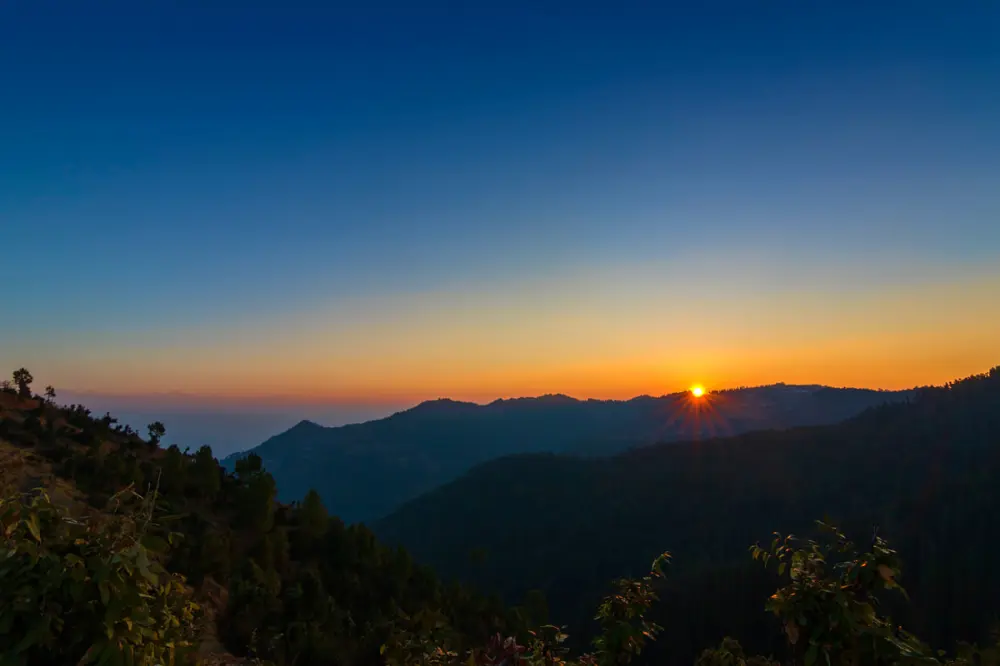
Besides night-sky photography, Jwarna is known for clear views of Himalayan moonrise and sunrise. During favourable weather, photographers can capture changing light over surrounding mountain ridges, making the area attractive for both landscape and astro photography.
Accommodation options around Jwarna include camps, cottages and glamping stays. Visitors can choose from overnight camping experiences or comfortable resort accommodation depending on their travel preferences.
Most travellers visit Jwarna as a weekend destination for stargazing, landscape photography, birdwatching and short nature walks.
Jwarna is located near Kanatal in Tehri Garhwal district of Uttarakhand. It is well connected by road from Dehradun, Mussoorie, Rishikesh and Delhi NCR, making it convenient for weekend trips as well as longer holidays.
Travellers visiting Jwarna can also explore nearby attractions including Surkanda Devi Temple, Dhanaulti Eco Park, Tehri Lake, George Everest Peak, Kanatal and surrounding Himalayan forests, allowing visitors to combine astro tourism with sightseeing and nature experiences.
Jwarna combines dark skies, high elevation, comfortable accommodation and convenient road access, making it a suitable destination for stargazing and astrophotography. Visitors can enjoy Milky Way photography during the summer season, observe meteor showers during favourable conditions and experience peaceful Himalayan landscapes away from urban light pollution.