Medical Fitness Required for Adi Kailash Yatra
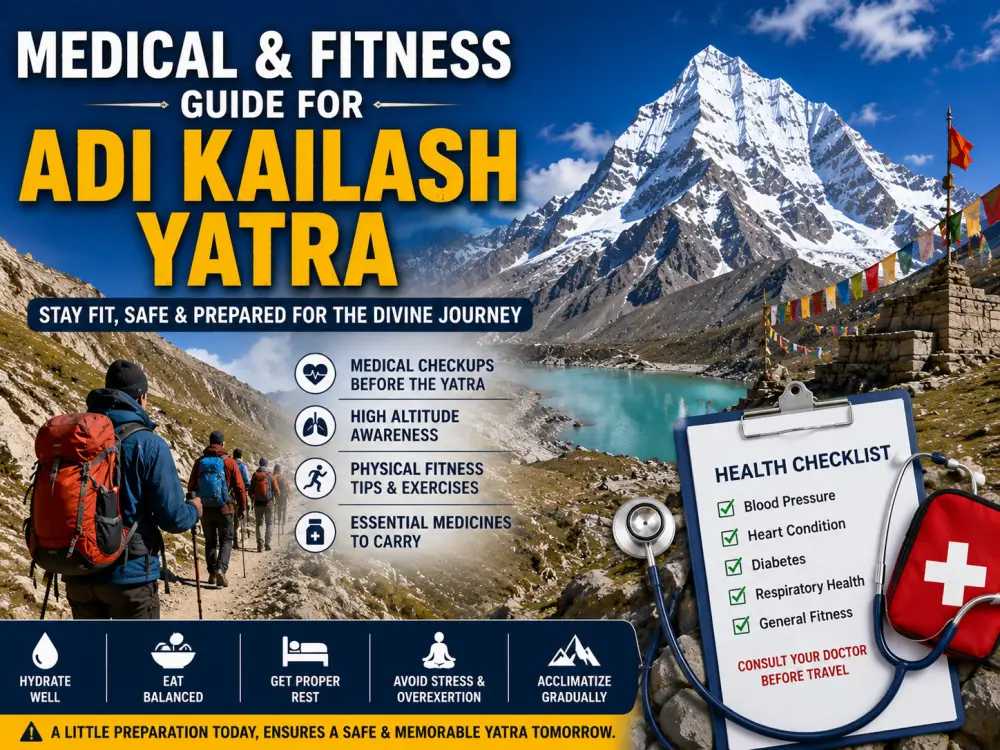
The Adi Kailash and Om Parvat Yatra takes pilgrims through remote Himalayan regions at high altitude, where low oxygen levels, changing weather and long road journeys can put additional stress on the body. A medical check-up before travelling helps identify health risks and ensures that you are fit for the journey.
Most tour operators recommend that pilgrims undergo a basic health assessment before the yatra, especially senior citizens and people with existing medical conditions.
Why Medical Fitness Matters for Adi Kailash and Om Parvat Yatra
- The route involves travel to high altitudes, where oxygen levels are lower and the heart and lungs must work harder.
- Many stretches are remote, with basic healthcare access, so prevention is far better than treatment.
- Pre-existing conditions like heart disease, uncontrolled blood pressure, or severe asthma can worsen at altitude and may become emergencies.
A medical fitness assessment before the yatra helps reduce the risk of altitude-related illness and allows doctors to advise whether additional precautions are necessary.
It is advisable to undergo a medical examination 4–8 weeks before departure so there is enough time to improve fitness or complete any recommended treatment.
Basic Medical Eligibility
- You should be physically fit with no serious uncontrolled chronic illness.
- Carry a medical fitness certificate if it is required by your tour operator or the organising authority.
- There is usually an age range (for example, children only above a certain minimum age and adults up to a senior age limit), with extra caution for older yatris.
Medical Conditions Requiring Doctor's Advice
If you have any of the following medical conditions, consult your doctor before registering for the Adi Kailash Yatra. Additional tests or medical clearance may be required.
- Heart disease (past heart attack, angina, serious arrhythmia)
- Uncontrolled high blood pressure
- Uncontrolled diabetes
- Severe asthma or chronic lung disease (COPD)
- Serious kidney disease or liver disease
- Recent major surgery or fracture
- Epilepsy or other serious neurological conditions
Physical Training and Preparation for Adi Kailash Yatra
Along with medical clearance, regular physical activity can help your body adjust better to long journeys and high-altitude conditions.
Cardio Training: Start regular walking or light exercise at least 4–6 weeks before the yatra.
- Brisk walking 30–60 minutes a day, at least 5 days a week
- Gradually include gentle uphill walks or stairs
- Aim to walk comfortably for 4–5 km without excessive breathlessness
Strength Exercises
- Light body-weight exercises (squats, lunges, wall push-ups) 2–3 times a week
- Simple stretching for legs, back, neck, and shoulders to prevent stiffness
Breathing and Lung Capacity
- Practice slow and controlled breathing exercises.
- Avoid overexertion while walking uphill.
- Take regular breaks during the journey.
Who Should Consider Postponing or Avoiding the Adi Kailash Yatra?
High-altitude travel may not be suitable for everyone. Consult your doctor before travelling if you have any of the following conditions.
- Have recent heart attack, bypass surgery, or serious heart rhythm problems
- Have uncontrolled high blood pressure or diabetes despite treatment
- Have severe asthma or chronic lung disease with frequent attacks
- Have advanced kidney or liver disease
- Are recovering from major surgery or a major fracture
Good health preparation is an important part of planning the Adi Kailash Yatra. A medical check-up, regular exercise and proper acclimatisation can help make the journey safer and more comfortable.
If you experience severe breathlessness, chest pain, dizziness or confusion during the yatra, seek medical assistance immediately and avoid travelling to a higher altitude until advised by a doctor.
Items to Carry for Personal Health
- Prescription medicines in sufficient quantity
- Personal medical records, if applicable
- Basic first-aid kit
- Water bottle to stay hydrated
- Sunscreen, sunglasses and lip balm
- Warm clothing suitable for high-altitude weather
Useful Tips
- Inform your group leader and fellow travellers about any important medical condition you have.
- Keep a card in your pocket mentioning: name, age, blood group, key illnesses, and emergency contact.
- Dress in proper layers to avoid both hypothermia (too cold) and heat stress (overheating in sun).
- Never hide symptoms out of fear of being sent back—early reporting can prevent serious complications.