Uttarayani Fair Bageshwar
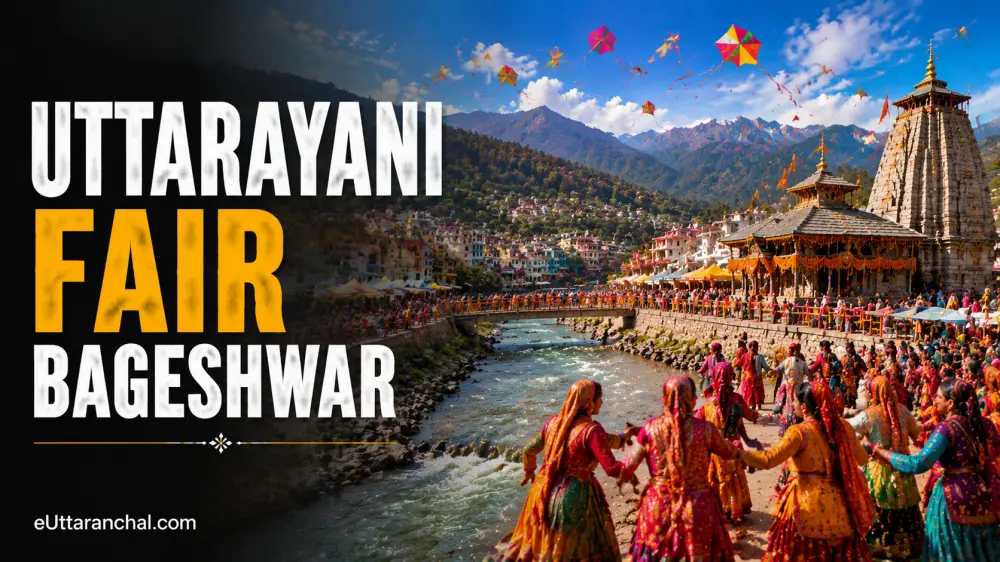
Uttarayani Fair (Makar Sankranti Fair) in Bageshwar
Uttarayani Fair is one of the oldest and most important traditional fairs of Kumaon, held every year in Bageshwar district on the occasion of Makar Sankranti. The fair is organised around the confluence of the Saryu and Gomti rivers, where thousands of devotees gather for a holy dip before participating in cultural programmes, shopping and community celebrations.
Besides its religious importance, Uttarayani Fair has long served as a meeting place for local artisans, traders, folk artists and visitors from different parts of Uttarakhand. Even today, it remains one of the most significant cultural fairs in the Kumaon region.
Why Uttarayani Fair is so popular in Kumaon?
Historically, Uttarayani Fair served as an important seasonal marketplace where people from remote Himalayan villages gathered to trade agricultural products, woollen garments, handicrafts and household goods. Along with trade, the fair became an important platform for preserving Kumaoni folk music, dance and traditional customs, making it one of the region's most enduring cultural events.
Rich History Connected With Uttarayani Fair
Uttarayani Fair also occupies an important place in the history of Uttarakhand's freedom movement. During the British period, large public gatherings at the fair became a platform for spreading social awareness and discussing public issues. In 1921, freedom fighter Pandit Badri Dutt Pandey led the movement against the oppressive Coolie Begar system at Bageshwar, where thousands of people gathered on the banks of the Saryu and Gomti rivers to oppose the practice. The movement became a significant milestone in the history of the Kumaon region.
The religious significance of Uttarayani fair
Every year on Makar Sankranti, devotees gather at the confluence of the Saryu and Gomti rivers to take a holy bath, which is considered highly auspicious in Hindu tradition. After offering prayers at nearby temples, visitors participate in the fair's cultural programmes and local markets.
Highlight of Bageshwar fair or Uttarayani Fair
- Holy dip at the Saryu-Gomti confluence on Makar Sankranti.
- Kumaoni folk dance performances including Chholiya dance.
- Traditional folk music and cultural programmes.
- Exhibition and sale of local handicrafts, woollen products and agricultural goods.
- Food stalls, local delicacies and amusement rides.
Visitors can purchase traditional Kumaoni products such as woollen shawls, blankets, copper utensils, bamboo crafts, spices, locally woven carpets and handmade household items.
Ghughutiya Festival of Kumaon
Ghughutiya is celebrated across the Kumaon region on the day of Makar Sankranti. Families prepare sweet dough delicacies called Ghughute, which are strung into garlands and worn by children. The sweets are later offered to crows while children sing traditional folk songs, making the festival an important cultural tradition associated with Uttarayani.
Best Time to Visit Uttarayani Fair
The fair is organised every year around 14 January on the occasion of Makar Sankranti. Visitors usually arrive early in the morning to participate in the holy bath before exploring the cultural programmes, exhibitions and local markets held throughout the day.
How to Reach Uttarayani Fair
The fair is held in Bageshwar town at the confluence of the Saryu and Gomti rivers. Bageshwar is well connected by road with Almora, Kausani, Kathgodam and Haldwani. The nearest railway station is Kathgodam, while the nearest airport is Pantnagar.
Travel Tips for Visitors
- Reach early on Makar Sankranti to avoid crowds.
- Carry warm clothing as January mornings are cold.
- Support local artisans by purchasing authentic Kumaoni handicrafts.
- Respect religious ceremonies around the river confluence.


