Nanda Devi Raj Jat Yatra
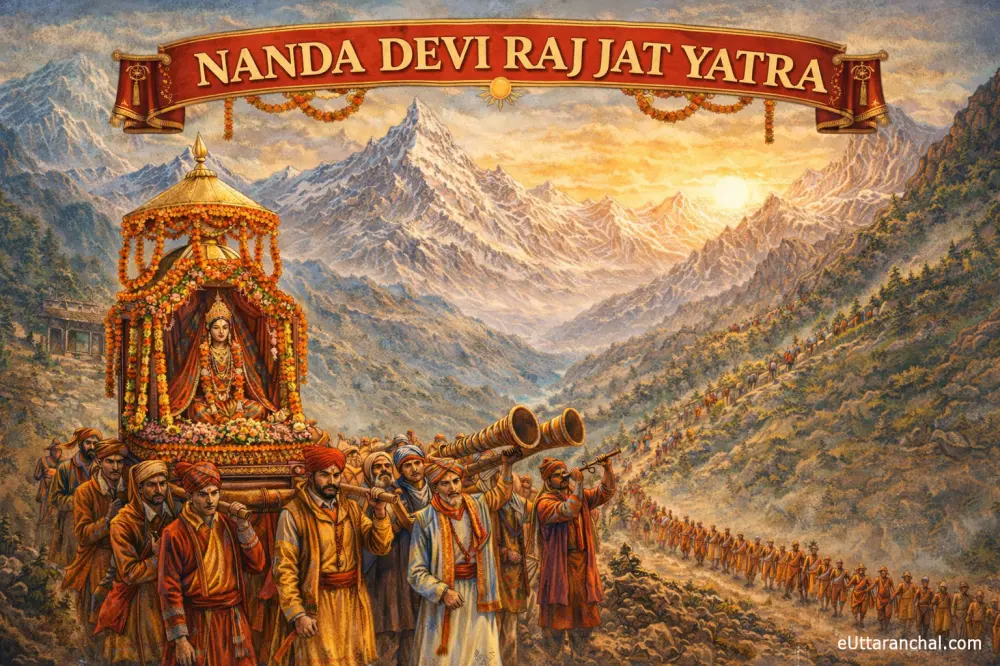
Nanda Devi is one of the main deities of Uttarakhand region. Nanda Devi Raj Jaat Yatra takes place in honor of the great Nanda Devi. Though Nanda Devi is worshipped in various regions of Uttarakhand, the region around Mt. Nanda Devi and its sanctuary which lie in Pithoragarh district, Chamoli district and Almora district are the key areas related to Nanda Devi.
Popularly known as the Himalayan Mahakumbh, the Nanda Devi Raj Jaat Yatra is held approximately once every 12 years and attracts thousands of devotees from Garhwal, Kumaon and different parts of India. The pilgrimage combines centuries-old traditions with a challenging Himalayan trek through villages, alpine meadows and sacred high-altitude sites.
Why This Yatra is Unique?
- Held only once in about 12 years, making it one of India's rarest pilgrimages.
- Follows an ancient traditional route from Nauti village to Homkund.
- Led by the sacred four-horned ram (Chausingya Khadu), considered a divine messenger.
- Brings together the religious traditions of both Garhwal and Kumaon.
- Crosses forests, Bugyals, glaciers and high Himalayan passes over nearly three weeks.
Nanda Devi Raj Jaat Yatra in 2027
Latest Update: The Nanda Devi Rajjat will take place in 2027. Rajkunwar Dr. Rakesh Kunwar made this announcement at the Nanda Devi Temple in Nauti. The *Dinpatta* (official schedule) will be released on Basant Panchami in 2027.
About Nanda Devi Raj Jat Yatra
Nanda Devi Raj Jaat Yatra begins from Nauti Village in Chamoli district and concludes at the sacred Homkund after covering nearly 280 kilometres through the central Himalayas. The pilgrimage passes through traditional villages, dense forests, alpine meadows, Bedni Bugyal, Roopkund region and finally Homkund.
The yatra is organised by local communities under centuries-old traditions. A sacred four-horned ram, known as Chausingya Khadu, leads the procession along with the palanquin (Doli) of Goddess Nanda Devi. Thousands of devotees accompany the procession while traditional folk songs, rituals and prayers continue throughout the journey.
The pilgrimage represents Goddess Nanda Devi's symbolic journey from her maternal home to Lord Shiva's abode in the Himalayas. Every halt, ritual and offering performed during the Raj Jaat reflects this deeply rooted cultural tradition of Uttarakhand.
It is believed that Nauti Village is the paternal home of Nanda Devi. Nanda Devi is an avatar of Lord Shiva’s wife, Goddess Parvati. This yatra earmarks the journey of Nanda Devi after marriage to her consort’s Lord Shiva home in Mt. Kailash. The rains during the journey signify Nanda Devi tears as she leaves her village home.
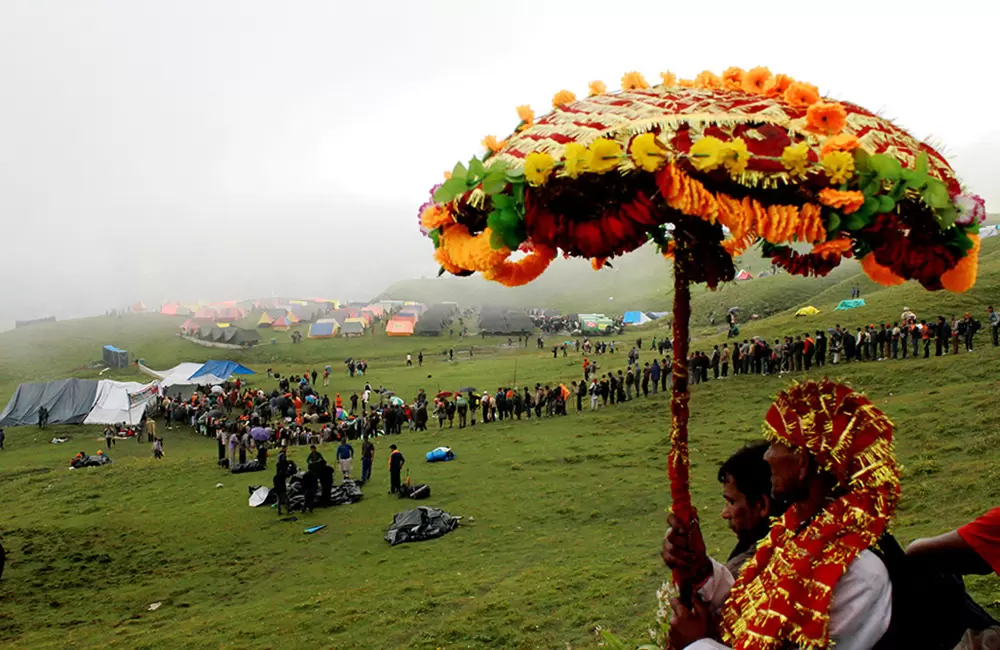
Unique Traditions and Rituals
- A four-horned ram (Chausingya Khadu) leads the procession
- Sacred palanquins (dolis) of the goddess are carried by devotees
- Traditional songs, dances, and rituals are performed throughout
- The ram is released at the end, symbolizing divine completion
Significance of Nanda Devi Raj Jat Yatra
Nanda Devi Raj Jaat Yatra is one of Uttarakhand's most important cultural and religious traditions. It symbolises Goddess Nanda Devi's farewell journey from her maternal home to Mount Kailash, the abode of Lord Shiva. The pilgrimage reflects the emotional bond between the people of Uttarakhand and their presiding deity.
The Raj Jaat also preserves centuries-old customs, local folklore, folk music, village traditions and community participation, making it one of the largest living cultural traditions in the Himalayas.
The journey reflects:
- The bond between humans and nature
- Devotion to the goddess Nanda Dev
- Ancient Himalayan cultural practices
The final offering at remote high-altitude locations signifies surrender and faith.
Route and Duration of Yatra
Duration: Around 18–20 days
Distance: Approximately 250–280 km trek
Key Stops during Nanda Devi Rajjat Yatra
- Nauti Village (starting point)
- Kansuwa
- Sem
- Koti
- Wan
- Bedni Bugyal
- Roopkund Lake
- Homkund (final destination)
The journey passes through dense forests, alpine meadows, and rugged mountain terrain.
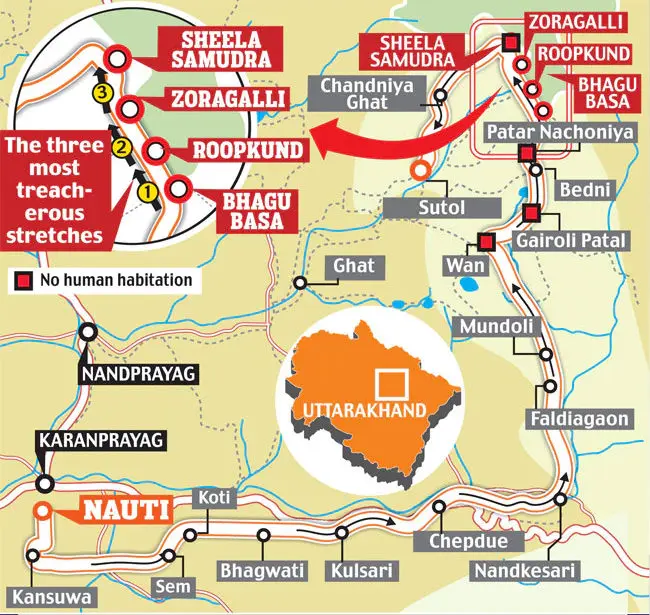
Tentative Night Halts of Nanda Devi Raj Jaat Yatra
| From | To | Distance |
| Nauti Village | — | |
| Nauti Village | Ida Badhani | 10 kms |
| Ida Badhani | Nauti | 10 kms |
| Nauti | Kansuwa | 10 kms |
| Kansuwa | Sem | 12 kms |
| Sem | Koti | 10 kms |
| Koti | Bhagoti | 12 kms |
| Bhagoti | Kulsari | 12 kms |
| Kulsari | Chepdue (Cheprau) | 10 kms |
| Chepdue | Nand Kesari | 11 kms |
| Nand Kesari | Faldiya | 8 kms |
| Faldiya Village | Mundoli | 10 kms |
| Mundoli | Vaan (Wan) | 15 kms |
| Vaan Village | Geroli Patal | 10 kms |
| Geroli Patal | Bedni Bugyal | 9 kms |
| Bedni Bugyal | Patar Nachoniya | 5 kms |
| Patar Nachoniya | Sila Samundra (via Roopkund and Junargali) | 15 kms |
| Sila Samundra | Chandniya Ghat (via Homkund) | 16 kms |
| Chandniya Ghat | Sutol | 18 kms |
| Suto | Ghat | 32 kms |
| Ghat | Nauti | 40 kms |
| Nauti Village | — |
How to reach?
The Raj Jaat Yatra begins from Nauti Village, located near Karnaprayag in Chamoli district.
- By Air: Jolly Grant Airport, Dehradun (around 220–250 km).
- By Rail: Rishikesh and Haridwar are the nearest major railway stations.
- By Road: Regular buses and taxis operate up to Karnaprayag. Local taxis and shared jeeps are available for Nauti Village.
Main Road Route: Haridwar – Rishikesh – Devprayag – Rudraprayag – Karnaprayag – Nauti.
Travel Tips for Nanda Devi Raj Jat Yatra
- Carry proper trekking shoes and rain protection.
- Weather changes rapidly at higher altitudes.
- Only physically fit pilgrims should attempt the complete route.
- Respect local customs and religious ceremonies.
- Avoid plastic waste and help keep the Himalayan ecosystem clean.
- Carry essential medicines and valid identity documents.
Essential Information for Pilgrims
- Accommodation: Camps and temporary shelters are arranged at major halts.
- Food: Community kitchens and local food stalls operate at several villages during the pilgrimage.
- Maximum Altitude: Around 5,000 metres near Homkund.
- Difficulty: Long-distance Himalayan pilgrimage requiring good physical fitness.
- Mobile Network: Limited or unavailable beyond several remote villages.
The Nanda Devi Raj Jaat Yatra is one of the most important religious and cultural pilgrimages of Uttarakhand. Beyond its spiritual significance, it preserves centuries-old Himalayan traditions, connects remote mountain communities and offers pilgrims a rare opportunity to witness the living heritage of the Garhwal Himalayas.