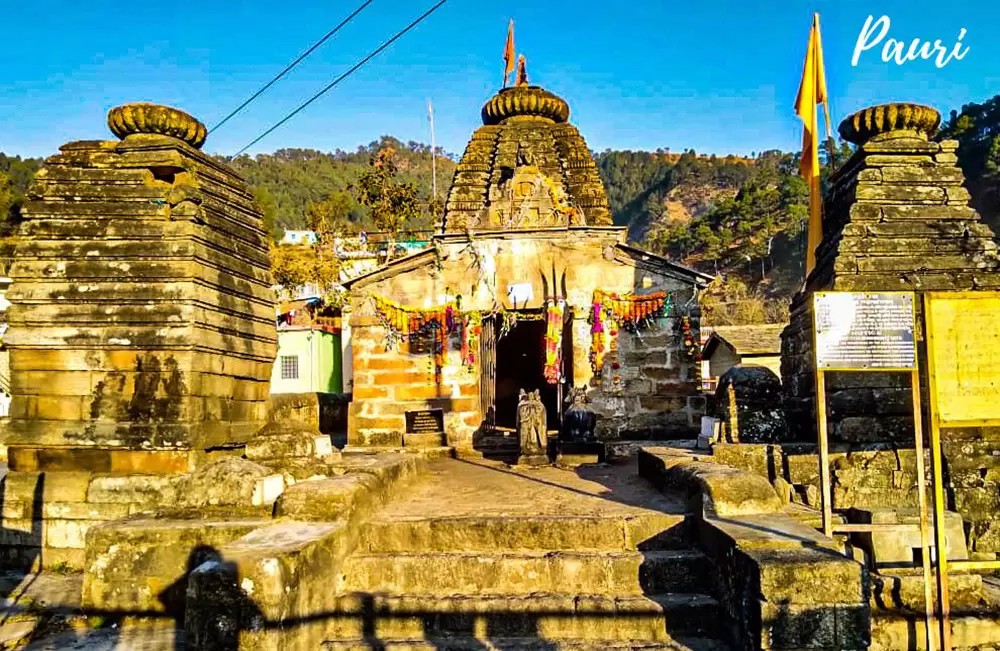
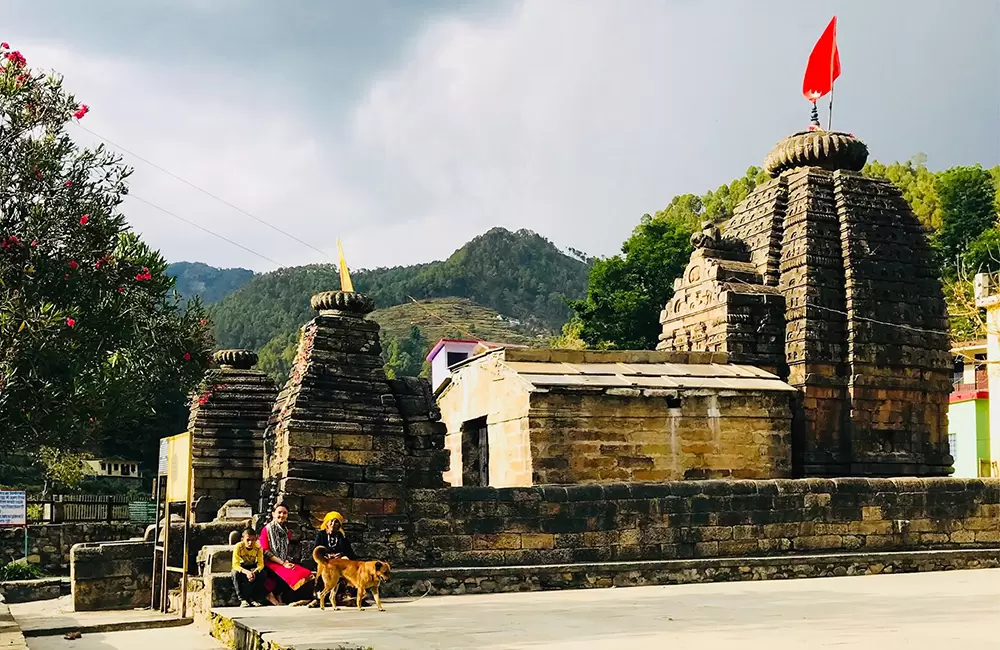
Rahu Temple in Pauri
Rahu Temple in Paithani village in Pauri is the only temple of Rahu where people visit throughout the year to worshiped Rahu with Lord Shiva. In this temple of Rahu, pilgrims offer Moong ki Khichdi as Prashad to Rahu.
According to the local peoples, it is said that Adi Shankaracharya built this temple. When he visits this place he realized the influence of Rahu in this area of Paithani village of Pauri. After this, he started the construction of the Rahu Mandir in Paithani Village.
In the Kedarkhand of 'Skand Purana' it is mentioned that at the confluence of Rath Vahini and Nawalika River, the foothills of Rashtrakuta Mountains, Rahu had done severe penance of Lord Shiva, which led to the establishment of Rahu Mandir. It is called Rathkshetra, which is named after Rashtrakuta mountain. Also due to Rahu's gotra "Paithinasi", this village was later named Paithani.
Mythological Background of Rahu
According to Hindu scriptures, especially the Samudra Manthan (churning of the ocean) legend:
- The asura Swarbhanu disguised himself among the gods to drink Amrit (nectar of immortality).
- Lord Vishnu, recognizing the deception, severed his head with the Sudarshan Chakra.
- Because he had already consumed nectar, the head became immortal — known as Rahu, while the body became Ketu.
In astrology, Rahu is regarded as a shadow planet associated with karma, transformation, illusion, and unexpected life events.
Legends Associated with the Paithani Rahu Temple
Local traditions attribute several origins to the temple:
- Rahu is believed to have performed penance to Lord Shiva in this region.
- Some traditions say sages established the shrine after recognizing the astrological importance of the site.
- Another belief associates the temple with the Pandavas during their Himalayan pilgrimage.
- Certain oral accounts credit Adi Shankaracharya with reviving or recognizing the site.
Unique Spiritual Significance
The Paithani temple is notable for:
Dedicated Rahu Worship: Few temples in India focus exclusively on Rahu, making this site distinctive.
Combined Worship of Rahu and Shiva: Local practice often includes worship of both Rahu and Lord Shiva, reflecting the belief that Shiva governs planetary forces.
Astrological Importance, Devotees visit for:
- Relief from Rahu Dosh or Kaal Sarp Dosh
- Mental peace and career stability
- Spiritual reflection and prayer
Rituals and Worship Practices at Rahu Temple
Some commonly observed traditions include:
- Offering moong dal khichdi as prasad
- Special pujas on Saturdays, Amavasya, and eclipse days
- Ritual bathing at nearby river confluences before worship
- Mantra chanting and havan ceremonies during astrologically significant periods
Practices may vary depending on local priests and festival timings.
Best Time to Visit
March to June (Spring–Summer): Pleasant weather (15°C–30°C). Best for travel and sightseeing
July to September (Monsoon): Lush scenery but possible landslides. Travel caution advised
October to February (Autumn–Winter): Cold but peaceful atmosphere. Suitable for spiritual retreats
Note: Astrologically significant dates, especially Saturdays and eclipse periods, are considered auspicious by devotees to visit Rahu Temple in Paithani Pauri Garhwal.
Location & How to Reach Rahu Temple
Paithani village lies in a scenic part of Pauri Garhwal, Uttarakhand, surrounded by forested hills, terraced farmland, and river valleys. The temple is located near the confluence of local rivers (often identified by locals as the Seoligad and Nawalika streams) and not far from the Nayar River basin.
By Road: Accessible from Kotdwar, Pauri, and Srinagar Garhwal. Buses, shared taxis, and private vehicles available
By Rail: Nearest station is at Kotdwar Railway Station (~80 km). Connected to Delhi and North Indian cities
By Air: Nearest airport is at Jolly Grant Airport, Dehradun (~140 km). Taxi or bus via Rishikesh and Srinagar routes
Approximate distances:
- ~55 km from Pauri town / Srinagar Garhwal region
- ~80 km from Kotdwar railway station
- ~140 km from Jolly Grant Airport, Dehradun
Nearby Attractions
- Khirsu – Quiet hill station with Himalayan views
- Jwalpa Devi Temple – Important Shakti shrine
- Kandoliya Temple, Pauri – Shiva temple with scenic surroundings
- Devprayag – Confluence of Alaknanda and Bhagirathi rivers forming the Ganga
- Lansdowne – Popular hill cantonment town
- Tarkund: A peaceful and less crowded religious site, perfect for nature lovers.
- Bheronkhal and Bunkhal Temples: Local centres of faith, offering a blend of mountain culture and devotion.
- Budda Bharsar: Wide mountain views, a great place for peace and meditation.
Contact Details of Pandit ji at Rahu Temple: 7505838805
Rahu Temple FAQs
Q: Where is Rahu Temple in Uttarakhand?
A: Rahu Paithani Mandir is located in the Pauri Garhwal district of Uttarakhand. The temple lies near Paithani village, close to a river confluence, surrounded by peaceful hills and natural scenery.
Q: Which God controls Rahu?
A: According to Hindu religious belief, Lord Shiva is considered the governing force over Rahu. Therefore, Shiva is worshipped alongside Rahu at the Paithani Temple, and devotees believe Shiva’s grace helps reduce the adverse effects of Rahu.
Q: What is the distance from Delhi to Rahu Paithani Temple?
A: The distance from Delhi to Rahu Paithani Temple is approximately 360–370 km, depending on the route and road conditions. A common route is Delhi ? Kotdwar ? Pabau ? Paithani.
Q: How to reach Rahu Paithani Temple from Delhi?
A: You can travel from Delhi to Kotdwar by train or bus. From Kotdwar, taxis and local buses are available to reach Paithani. Uttarakhand Transport buses also run from ISBT Kashmiri Gate toward the region. The hill journey from Kotdwar to Paithani is scenic with mountain views.
The Rahu Temple of Paithani is a distinctive pilgrimage destination combining astrological faith, mythological tradition, and Himalayan natural beauty. Whether visited for spiritual reasons, cultural interest, or quiet reflection, it offers a unique experience in Uttarakhand’s Devbhoomi landscape.
Read How to Reach guide for Pauri.
What is Rahu Temple famous for?
Rahu Temple is popular place for following activities/ interests - Emerging Destinations, Temples, Weekend Getaway.