Adventure Weddings: Trek, Camp & Wed in the Himalayas
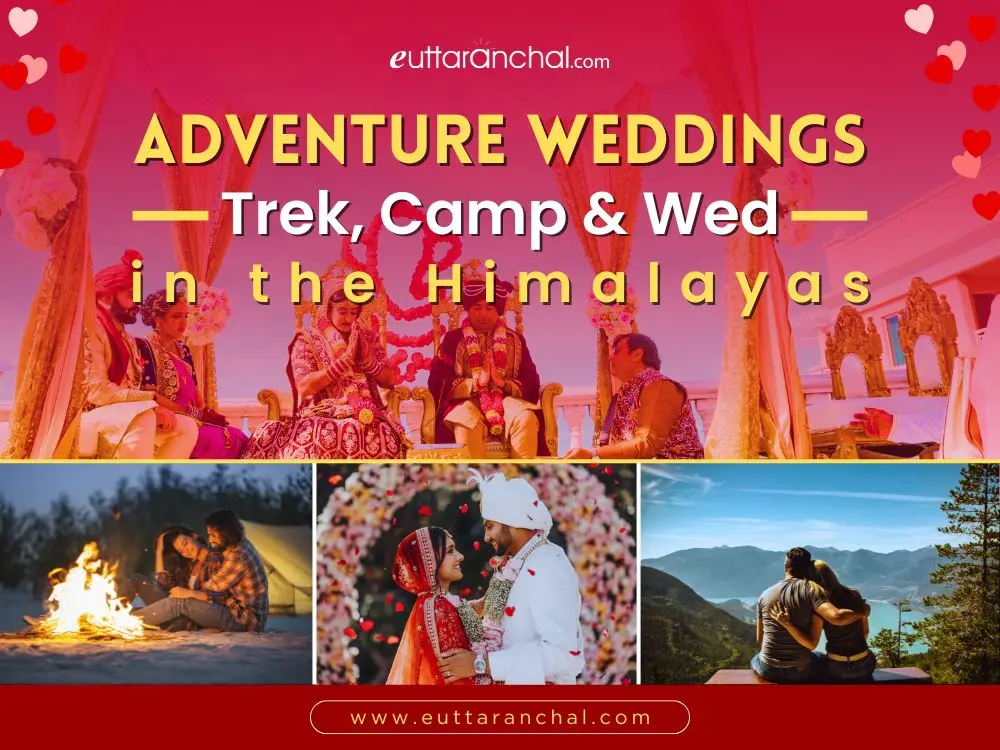
Couples who visit the Himalayas do not just desire the scenic view; they desire the experience of the journey to be in their memory. For them there is also the adventurous wedding where a hiking trip, a night under the stars, or a little campout is a part of the wedding functions.

Activities like Treks, camps, and weddings can be intimate, off-the-record events or a few-day trek that involves the immediate family, photography, and a few ceremonial words on a summit or a remote location. The most recent wedding trends in Indiashow a rising interest in couples who are preferring shorter and well-planned adventure trips over long and elaborate destination stays and weddings.

Popular Formats: Trek Weddings vs Camp Weddings

Trek-weddings include extras: a one to several-day journey with an organised trek up to a scenic peak, followed by a small ceremony and a party in camp. Base camps or camp weddings consist of a field base, tents, and an adjacent ceremonial location; they allow more people to attend without everyone having to hike. All formats compromise between complexity and number of guests with intimacy and remoteness, and as such, choose which one fits your fitness, budget, and guest list.

Best Himalayan Locations for Adventure Weddings in Uttarakhand

The Himalayas of uttarakhand have numerous options that are based on their accessibility and heights. The best treks of lower and mid altitude with both scenic and easier logistics would be around Kedarkantha and DayaraBugyal.
 Camp-wedding fusions are held in popular hill-station wedding destinations, such as Auli or Mussoorie, with guests staying in hotels and taking short hikes or using chairlifts to reach the wedding venue. Plan within recommended limits to reduce weather risk said in regard to time and local conditions.

Best Season for Adventure & Trek Weddings

The season is also important when it comes to adventure weddings, compared to the majority of venue-based ceremonies. When the right season is planned it is less likely to be canceled and the experience will be more enjoyable and safer.

  • Most Himalayan treks are safest in the spring (April-June) and the autumn (September-October), when the trails are not likely to be covered with snow, and the weather is more predictable.
  • Weddings in the snow or high-altitude can be considered during the winter season, but it increases the risks due to cold and accessibility problems.
  • During the monsoon months, heavy rain and landslide danger is observed in most ranges hence not to travel during July-August unless your route is known to be safe.

Permissions, Permits & Legal Requirements

Numerous Himalayan walks and elevated regions have allowed trekking and walking for tourists. They might require trekking permits to enter a protected area, and special permission from the forest or district authorities to hold a gathering or take photographs. The national parks and biosphere areas limit the number of people in groups or prohibitthe use of ceremonies in sensitive areas.

Early checking of permit requirements is imperative, consultation with local guides or a reputable operator familiar with the rules, and the filing of the required applications well ahead of schedule are all required. The absence of permits can result in either fines or cancellations and in some cases the authorities may demand evidence of plans or insurance in the event of remote events.

Health, Safety & Acclimatisation Planning

Health issues are often related to changes in weather and remoteness. Unless your wedding is at an altitude below 3,000 meters, you will need to acclimatize, carry a simple first aid kit, and even employ guides who have received first aid training in high altitudes.

Consider travel insurance, which typically includes evacuation insurance and medical coverage in mountainous regions. Quickly inform participants of the required fitness levels, offer proposed training increases prior to the event to those interested in joining, and provide a definite option to the elders or less-fit members so that all are able to participate safely.

There is also a possibility that a local operator can make porters or pack animals available to non-trekking guests to allow them to get to ceremony locations without issues.

Logistics Planning for a Trek or Camp Wedding

A successful adventure wedding is based on logistics. Transport, guides and porters Book and confirm tenting, cooking and sanitation plans. The list of gear should be exact: there should be enough tents, warm sleeping bags, insulating pads, cold-weather clothes, and lights, which cannot be compromised. In the case of food, renting caterers or cooks capable of working on a gas or wood-fired camp kitchen, and having the knowledge of how to deliver safe and hot meals when in the field is a necessity.

Other couples also hire a small support vehicle to carry luggage and older people to a lower-elevation party venue. Allow time of load-in, setups, sound checks in case you want to use music and weather contingency days. Good logistics minimise stress during the wedding day.

Working With Local Guides & Adventure Wedding Planners

Collaborate with vendors who have experience working in mountain events. The local trekking and adventure wedding planners and the nearby hotels tend to collaborate to offer a complete package: permits, guides, camp set up, catering and flower or ornament groups with high altitude experience. Hiring local suppliers is beneficial to the local economy and helps minimize travel-related emissions. Request references and evidence of similar occurrences in the past, find out whether or not vendors have alternative power backup, and verify their emergency plans and evacuation routes.

Ceremony & Ritual Ideas Suitable for Mountain Weddings

Altitude ceremonies are advantageous due to their simplicity. Identify rituals that are brief and fit the setting and observe altars to the local traditions or holy locations; do not conduct any group in an ecologically sensitive area. Have a small, rather clear footprint mandap or metaphorical circle of greenery and stones locally. To help the ceremony connect to the place and minimize its impact, ensure that it includes elements of the area, such as an elder blessing the ceremony in a village, a flute player, or a small garland of flowers native to the mountain region.

Photography & Storytelling in High-Altitude Weddings

Adventure weddings are constructed to take photographs, but the conditions and the weather in the mountains are dynamic. Hire professional photographers who have experience with low-temperature and high-altitude shoots; they can understand how to handle batteries, lens fogging, and portable lighting. Jot down an itinerary of temporary photographs amidst golden hours, add unarranged moments of the treks: pass by with one another, covering with a common framework, tent-side ceremonies. A longer photoshoot when guests are relaxed can be considered a day before the wedding or after it, a so-called down-day.

Sustainable & Eco-Friendly Adventure Weddings

Planning should be based on the need to protect the delicate mountain ecosystems. Use reusable ware, reduce the use of single-use plastics, keep waste to a minimum, and leave the camp place better than you found it. Use floral arrangements that do not involve intrusion and find local food. Protect nature and water sources by conducting rituals and activities in specific locations and applying the principles of the Leave No Trace. Making decisions that are responsible will conserve these places to the next generation and will render the event more valuable.

Guest Comfort, Accessibility & Participation Options

Adventure weddings tend to restrict the number of guests; however, you can invite more by offering them different levels of participation: active trekkers, guests on short hikes, and non-trekking guests who come and enjoy the final wedding and reception at a local lodge. Offer specification to offer choices to guests with mobility issues. Send out packing lists, fitness expectations, weather contingencies etc in advance so that guests come prepared.

Budget Considerations & Cost Breakdown

The cost of adventure weddings may be less than big resort weddings though prices change. You can save on the cost of the venue and decor, but spend a lot on guides, gear rental, transport, permits, and special vendors. Include contingent days, insurance and potential additional travel expenses on vendors. These costs can be made more transparent by working with a package operator and eliminate the possibility of having unexpected costs.

Legal & Cultural Considerations

In the event that you are marrying under civil law or religious customs, then ensure that the marriage is legal where you are registered. A short legal wedding in an urban center and a symbolic mountain ceremony are some of the rituals many couples perform. Respect local traditional practices and sacred places, also, consult village heads before using community land and do not bother with the rituals that violate local taboos or places of worship.

Final Thoughts

Choosing a combination of daring and prudence, adventurous weddings in the Himalayas are magnificent. Select the appropriate season and path, attain the necessary permits and regional partners, health and safety plan, and put sustainability at the centre of your decisions. A trek, camp, and wed format will make a wedding a journey to share with guests and vendors, provided that proper logistical planning and a truthful communication plan are in place. With this approach, it will become the story that you and your guests will remember most. Drafting a simple, day-by-day 3-day itinerary for a trek-wedding, a packing checklist for guests, or a vendor checklist for a particular Himalayan region can be done.

You may also like