Kailash Mansarovar Yatra 2026
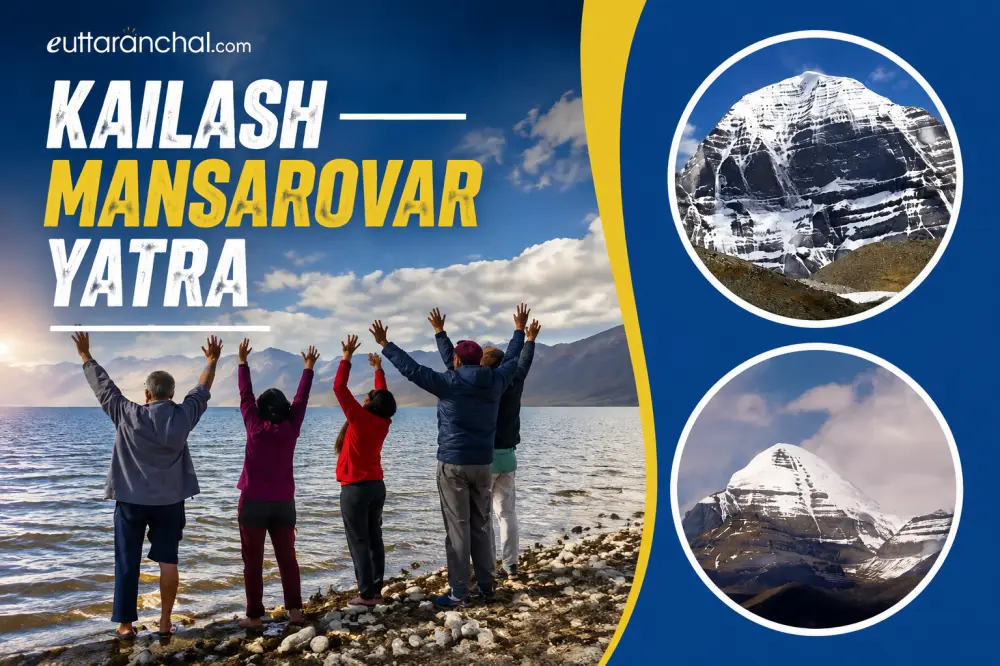
Kailash Mansarovar Yatra is one of the most revered pilgrimages in Asia, attracting devotees of Hinduism, Buddhism, Jainism and Bon. The journey includes a visit to the sacred Lake Mansarovar and the holy Mount Kailash, located in the Tibet Autonomous Region of China.
For Hindus, Mount Kailash is believed to be the abode of Lord Shiva, while Lake Mansarovar is regarded as a symbol of purity and spiritual awakening. Pilgrims undertake this challenging high-altitude journey to perform the sacred Kailash Parikrama (Kora), seek blessings and experience one of the world's most significant spiritual destinations.
Kailash Mansarovar Latest News Updates
Kailash Mansarovar Yatra Resumes After 6-Year Hiatus
The Kailash Mansarovar Yatra resumed in 2025 after a six-year gap through the official routes via Lipulekh Pass in Uttarakhand and Nathu La Pass in Sikkim. The pilgrimage is coordinated by the Ministry of External Affairs in association with the respective state governments and Chinese authorities.
China Hikes Fee by INR 20,000
Two Climate Adaptation Centers to be Set Up Between Gangtok and Nathu La
After a five-year hiatus, the Kailash Mansarovar Yatra is set to resume, but this time with a higher cost. China has increased its fee by INR 17,000 to INR 20,000 per pilgrim, making the overall journey more expensive.
The pilgrimage is conducted via two routes:
Lipulekh Pass (Uttarakhand)
Nathu La Pass (Sikkim)
In 2019, the total cost via Lipulekh was INR 1.30 lakh, including INR 77,000 as China’s fee. In 2025, the cost has risen to INR 1.84 lakh, with INR 95,000 payable to China.
For the Nathu La route, the total expense is now estimated at INR 2.84 lakh, of which INR 2.05 lakh is charged by China.
Additionally, Sikkim Government is enhancing infrastructure to support the yatra. According to MLA Thinley Shering Bhutia, two climate adaptation centers are being constructed between Gangtok and Nathu La.
Longer Duration This Year:
Lipulekh Route: 23 days (was 20–21 days earlier), including 12 days in India and 9 in Tibet.
Nathu La Route: 25 days (was 23 days earlier), with 15 days in India and 10 in Tibet.
The journey remains deeply spiritual but will now require more time and higher financial commitment.
Importance of Mount Kailash
Mount Kailash, situated in Tibet, is a revered pilgrimage destination for four major religions: Hinduism, Buddhism, Jainism, and Bon. Each tradition holds unique beliefs and significance regarding the mountain, making it a profound spiritual site for devotees from around the world.
- Hinduism: In Hinduism, Mount Kailash is revered as the sacred abode of Lord Shiva, where he resides in deep meditation alongside his consort, Goddess Parvati, and his celestial attendants, the Ganas. According to the Vishnu Purana, the mountain's four faces are made of crystal, ruby, gold, and lapis lazuli. Mount Kailash is regarded as the cosmic axis, or the "pillar of the world," from where the entire universe is believed to be governed and sustained.
- Buddhism: In Buddhism, Mount Kailash is known as Garu Rimpoche, meaning "precious jewel of snow," and is regarded as a massive mandala. According to legend, it is the sacred abode of Chakra Samvara and Guru Rinpoche (Padmasambhava), who introduced Buddhism to Tibet. It is a significant pilgrimage site in Buddhist tradition, symbolizing supreme bliss and enlightenment. A famous tale speaks of Milarepa, a revered Buddhist saint, as the only pure soul to have reached the peak of Kailash by riding sun rays.
- Jainism: In Jainism, it is believed that the first Tirthankara, Rishabhdeva, attained moksha at Mount Ashtapad, located near Mount Kailash. According to the legend, Rishabhdeva came to this sacred region to seek enlightenment. Though he initially intended to return, after experiencing the profound energy of Kailash, he chose to renounce everything and merge with the mountain, attaining spiritual liberation.
- Bon: In Bon mythology, Mount Kailash is revered as the site where Thonpa Shenrab Miwo descended from heaven to impart his spiritual teachings. It is conceptualized as a nine-story swastika, representing auspiciousness and a powerful source of spiritual energy. For practitioners, Kailash is not merely a physical landmark but a vital spiritual hub linking the earthly realm with the divine. Pilgrims embark on journeys to this sacred mountain, believing it grants profound blessings and a pathway to enlightenment, highlighting the deep connection between spirituality and nature in Bon tradition.
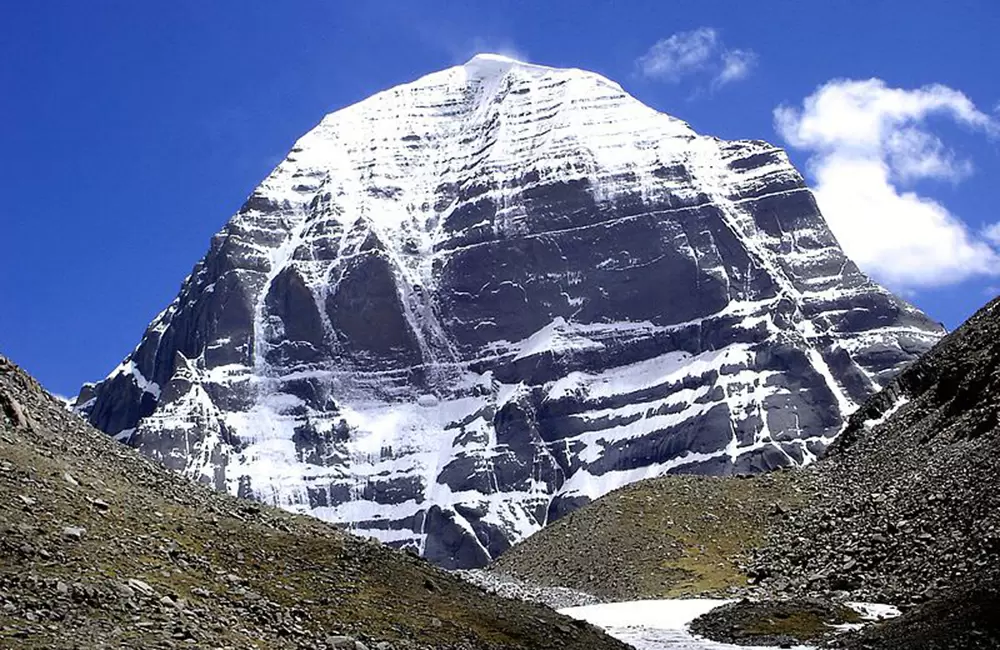
Kailash Mansarovar View Point of Mount Kailash
Besides the traditional Kailash Mansarovar pilgrimage into Tibet, visitors can now obtain distant views of Mount Kailash from the Old Lipulekh Pass viewpoint in Uttarakhand. This route allows Indian travellers to witness Mount Kailash without crossing the international border.
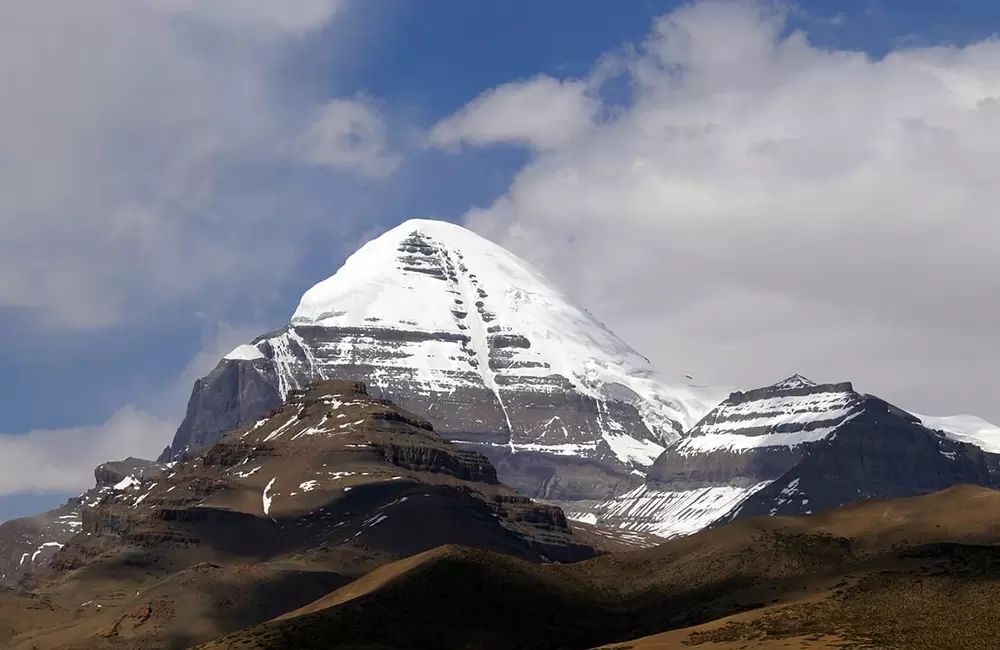
Kailash Mansarovar Yatra Routes from India
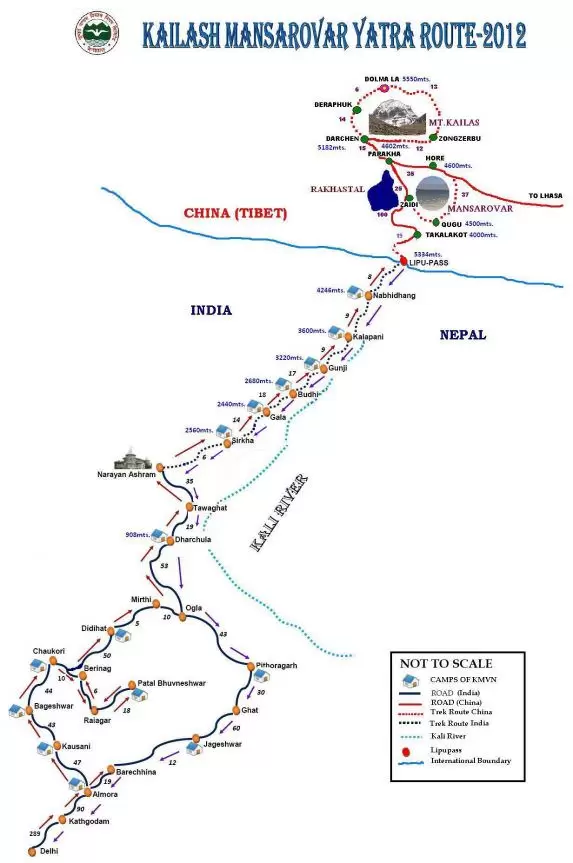
Traditionally, Indian pilgrims travelled to Kailash Mansarovar through two official routes operated by the Ministry of External Affairs:
- Lipulekh Pass (Uttarakhand) – partially involves trekking.
- Nathu La Pass (Sikkim) – largely motorable and preferred by senior citizens.
In addition, visitors can now undertake Mount Kailash View Point tours from the Indian side via Gunji and Old Lipulekh Pass.
Best Time To Visit Kailash Mansarovar
- May to June: Stable weather, road accessibility and comfortable temperatures make this the preferred season.
- July to August: Pilgrimage continues, although rainfall may affect road conditions in some sections.
- September: Clear mountain views with colder nights.
- October to April: Heavy snowfall generally makes the route inaccessible.
Places to see near Kailash Mansarovar
Mount Kailash
Mount Kailash is regarded as the abode of Lord Shiva in Hinduism and is revered by followers of Buddhism, Jainism and Bon. Pilgrims visit the mountain for darshan and the sacred Kailash Parikrama. Although climbing the peak is prohibited, its distinctive pyramid-shaped summit and the nearby Lake Mansarovar make it one of the world's most significant pilgrimage destinations.
Rakshas Tal
Located about 23 km from Lake Mansarovar, Rakshas Tal is a high-altitude saltwater lake closely associated with Hindu mythology. According to legend, Ravana performed intense penance here to seek the blessings of Lord Shiva. Unlike the freshwater Lake Mansarovar, Rakshas Tal is saline and is traditionally regarded as representing worldly desires, while Mansarovar symbolizes purity and spiritual awakening. The lake, surrounded by the barren Tibetan landscape, offers spectacular views of Mount Kailash and is an important stop during the pilgrimage.
Distance: Approximately 23 km from Lake Mansarovar.
Gaurikund
Gaurikund is a small glacial lake located below the Dolma La Pass on the Kailash Parikrama route. According to Hindu belief, Goddess Parvati used this sacred lake for bathing, making it an important religious site for pilgrims. Situated at an altitude of about 5,608 metres, Gaurikund can be viewed during the most challenging section of the parikrama. The turquoise waters surrounded by rugged Himalayan terrain make it one of the most scenic and spiritually significant stops along the route.
Distance: Located along the 52-km Kailash Parikrama near Dolma La Pass.
Charansparsh (Kailash North Face)
Charansparsh is a sacred point near the north face of Mount Kailash where pilgrims walk as close as permitted to the mountain during the Kailash Parikrama. According to Hindu belief, reaching this spot symbolises touching the feet of Lord Shiva and is considered highly auspicious. Pilgrims generally reach Charansparsh after trekking from Dirapuk, where they can witness the magnificent north face of Mount Kailash from close proximity.
Distance: About 40 km by road from Lake Mansarovar to Darchen, followed by a 20-km trek to Dirapuk and a short hike to Charansparsh.
Yam Dwar
Yam Dwar, meaning the "Gateway of the God of Death," marks the official starting point of the Kailash Parikrama. According to Hindu belief, passing through Yam Dwar symbolizes leaving behind worldly attachments before beginning the sacred journey around Mount Kailash. Located near Darchen, this revered site is where pilgrims offer prayers and seek blessings before commencing the 52-km circumambulation of the holy mountain.
Distance: Approximately 7 km from Darchen, the starting point of the Kailash Parikrama.
How to Reach Kailash Mansarovar
- Delhi to Kathgodam: Travelers can start their journey from Delhi to Kathgodam by train, private cabs, or shared taxis, covering approximately 281 kilometers in about 6 to 7 hours. Alternatively, they can opt for a flight to Pantnagar Airport, located just 35 kilometers from Kathgodam, offering a quicker and more convenient option for those preferring air travel.
- Kathgodam to Dharchula: Start your journey from Kathgodam to Dharchula, which is around 337 km away. This journey can be done by road, by taxi or bus usually taking about 7 to 8 hours.
- Dharchula to Gunji: Hire a local taxi from Dharchula to Gunji, located approximately 70 kilometers away. The journey usually takes around 2 hours.
- Gunji to Om Parvat: From Gunji, you can take local transportation or a pre-booked local taxi to Om Parvat, which is about 22 kilometers away. Due to the challenging road conditions, this journey may take longer than expected.
- Om Parvat to Old Lipulekh Pass: From Om Parvat, proceed to the Old Lipulekh Pass. After reaching the pass, there is a 3-kilometer trek to the viewpoint, where you can enjoy a divine darshan of Mount Kailash.
Kailash Mansarovar Tour Options
Travellers can undertake the traditional Kailash Mansarovar pilgrimage through the official government-operated routes whenever they are open. In addition, several operators in Uttarakhand organise Mount Kailash View Point tours via Gunji and Old Lipulekh Pass, allowing visitors to obtain darshan of Mount Kailash from the Indian side.
Sample Adi Kailash & Mount Kailash View Point Tour Itinerary
Day 1: Arrival Pithoragarh
Arrive in Pithoragarh by evening. A medical check-up will also be conducted to ensure you are fit for the journey ahead.
Day 2: Pithoragarh to Gunji (Via Heli)
You will start with road transport from KMVN TRH Pithoragarh to the Pithoragarh Helipad. From there, enjoy a breathtaking helicopter ride to Gunji. Upon arrival at the Gunji Helipad, you will be transferred to your homestay for a comfortable overnight stay
Day 3: Gunji to Adi Kailash to back Gunji
Begin on a journey from Gunji to Adi Kailash for sightseeing. Enjoy the scenic views and spiritual ambiance of this sacred site. You will have road transport provided from your homestay to Jolingkong and back, ensuring a comfortable return to your accommodation in Gunji
Day 4 : Gunji to Om Parvat to Old Lipulekh Pass to back Gunji
Travel from Gunji to Om Parvat and continue towards the Old Lipulekh Pass. Enjoy sightseeing along the way, taking in the breathtaking landscapes and spiritual significance of the sites. Road transport will be provided from your homestay to the Old Lipulekh Pass and back, ensuring a comfortable return to your homestay in Gunji for the night.
Day 5: Gunji to Pithoragarh (Via Heli) Tour Concludes
Your tour concludes as you travel from Gunji to Pithoragarh. Begin with road transport from your homestay to the Gunji Helipad, where you will board a helicopter for a scenic ride back to Pithoragarh. Upon arrival at the Pithoragarh Helipad, you will be transported to KMVN TRH Pithoragarh, marking the end of your memorable journey.
Essential Travel Tips
- Carry valid identity documents required for the journey.
- Acclimatise properly before travelling to higher altitudes.
- Consult a doctor if you have heart or respiratory conditions.
- Pack warm clothing, rain protection and personal medicines.
- Travel insurance is recommended for high-altitude journeys.
Useful Tips
- If you have less number of days then you can also visit Adi Kailash in Kumaon Region