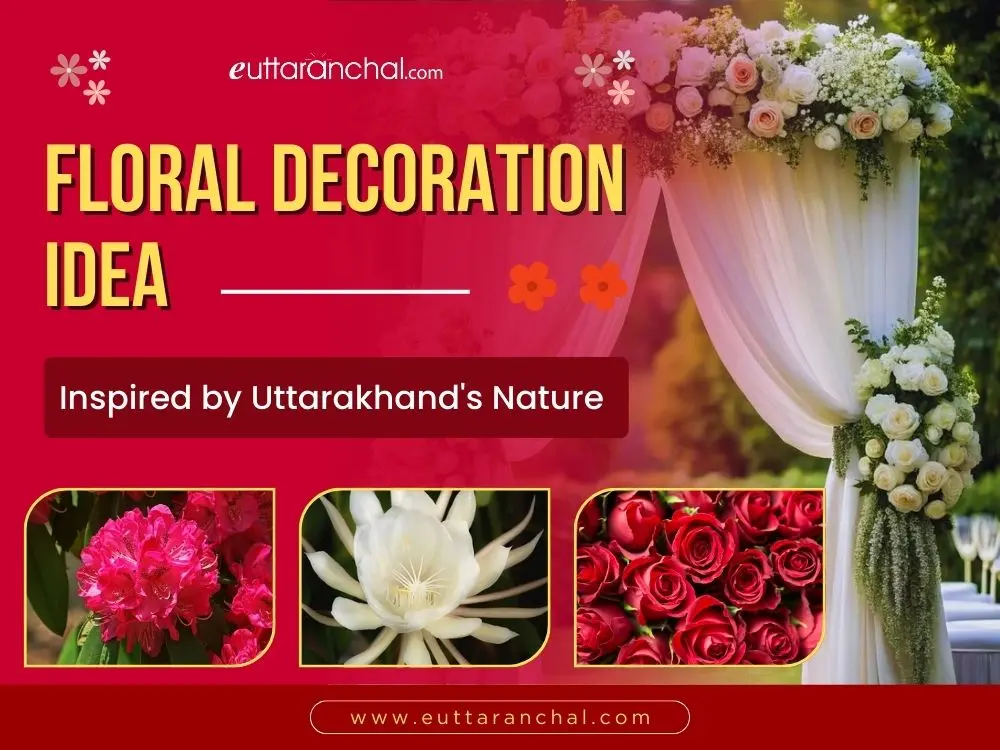
Uttarakhand boasts mountains, forests, and a diverse array of wildflowers, which transform the landscape with each passing season. The bright red rhododendron (locally known as Buransh) and the scarce Brahma Kamal at the alpine meadows are plants that carry a significant visual and cultural connotation.
Floral design, utilizing native shapes, colours, and ideas, can result in the creation of local, seasonal, and nature-based decorations. This article presents straightforward and easy-to-follow floral decoration concepts that are inspired by the natural beauty of Uttarakhand and the latest trends in environmentally friendly and locally inspired styles.

Local flora designs accomplish a number of useful tasks at the same time. They place an emphasis on place, tie visitors to the local festivals and narrative, minimize the necessity of importing flowers, and, in many cases, are more in harmony with the local season and weather.
The use of native or locally grown blooms would also benefit the local farmers and reduce the environmental cost of transportation. Such events and home decor are becoming very popular among designers and couples who desire to be more authentic and environmentally friendly.
In the event of a collection or a demonstration, harmonise with the colours of the season so that the florals would not be out of context. Seasonal tones can also be used to bring the decor outdoors, such as the lawns of hills or terraces of lodges.
The seasons in Uttarakhand are definite indications of color and texture.
New trends combine fresh flowers with dry and preserved objects. Display in Uttarakhand style Decorations may be done in fresh native flowers where possible, supplemented by dried grasses, cedar sprigs, or dried rhododendron petals to make them strong and lasting.
Mountain textures are brought with them in dried materials; fluffy grasses of meadows, seed-pods, or pressed leaves. The preserved flowers will be able to reproduce the rare alpine flowers featured in the table centerpieces and on the walls without harming the delicate wild populations. This combination also ensures that the appearance remains original and the arrangements are more sustainable in case of multi-day events.
In the case of small weddings or ceremonies, a mandap made of local wood and covered with floral garlands can be a direct reference to the forests of Uttarakhand. In place of heavy and full flower coverings, 4 groupings of native blooms on the four corners and simple garlands of marigolds hung between sprigs of cedar or deodar.
Allow the building to shine through: measured floral accents of open structures are rustic and modern simultaneously. To make evening events even, the warm LED lights should be placed in the middle of the flowers, which will illuminate the texture without hot spots. This strategy makes the design light, sustainable and clearly regional.
Build mini landscapes like a garden decoration theme. Put into little wide-bottomed containers to make little hill-slopes, a foundation of moss, or of local grasses, a bunch of little primulas, or primrose-like flowers, and one accent stem of buransh or a conserved alpine flower.
With indoor reception tables, one can use natural slate, river stones, or hand-thrown local pottery pieces as their base. These background elements make the floral arrangement appear as part of the setting rather than a setup for the occasion.
Arch flowery walls remain in fashion, though a twist to the Uttarakhand style is to have them textured instead of being completely floral. Mix fresh flowers with panels of focal areas featuring grass and cedar branches, panels, and handloom textiles, as well as yak wool, for a woven look.
This maintains the total budget and number of flowers spent at a low level, providinga dramatic visual impact. Place here and there a group of statements, rhododendron in spring and white primulas in colder seasons, so that the wall is anchored and so that natural focal points of photographs are made.
Culturally, reference designs incorporate elements that reference local festivals. As an illustration, Phool Dei, a Garhwali spring festival disposition, may be the motivation of little ritual trays woven with blooms of the season and offerings. Simply low designs of undisturbed flowers in tiny earthen bowls are used to replicate the spirit of the festival. These little details render the decor significant to the guests who are aware of the tradition and informative to those who are not.
Repeated markers of nature can be applied to outdoor paths and aisles in the venues in the Himalayas. Instead of heavy pedestals, some tight bunches of dried meadow grasses, pine cones, or single-stem flowers are set in rustic jugs or metal pails.
Spacing them out between intervals should make the path look like a procession of nature conducted by nature. This is effective on rough surfaces, and the styling is easy to maintain and windproof, while also appearing unified.
One of the trends has been a preference for locally grown or responsibly grown florals. Request that florists use flowers grown in local areas or through community cooperatives.
These are convenient decisions, and they align with the beliefs of most couples and event organizers in current times.
Include decorative elements in the guest gifts. Little bags of locally gathered seed blends (of harmless and non-invasive plants) or little jars of preserved floral art created using local flowers are much-appreciatedfavors.
Alternatively, pressed flower bookmarks or cards that are produced by the local craft groups also help local artists and lessen the use of single-use plastic. These favors provide continuity of the event to place and leave the guests with the flavour of the landscape.
Temperature, wind, and sun have a significant impact on flowers in mountainous climatic conditions. Utilize wind-protective anchors, sheltered structures and shaded positions of the delicate flowers when hosting an occasion during the day. In evening designs, the lights must be low-heat.
The LEDs put on batteries and installed in a manner that shows the natural shape of the flowers are easy and secure. In case of a possible rain, select short-term substitutes such as potted plants, or glass-wrapped frames that shelter the flowers until the occasion starts.
Local florists and craftsmen are aware of what will survive a ceremony on top of the hill and what will not. They will be able to suggest alternatives to rare flowers and propose locally made vessels, i.e., carved wooden bowls or brass plates.
The recruitment of local crews also has the added advantage of reduced transport emissions and the economic impact on the area, which is a viable win-win solution to sustainable design.
Not every design must be big. In the case of guesthouses and lodges, smaller touches that are more frequent to do: a single piece of buransh in a small-necked bottle at a window, a bunch of dried grasses in the middle of the night table, or a pressed-flower menu in the meal table.
There is a uniform look, achieved through these tiny details repeated without excessive care. Native plants in terracotta pots, when potted, maintain a green appearance and can be replanted at the end of the event.
Bring on-site some basic DIY workshops that are conducted by the local florists and guests can create their own garlands or pressed-flower frames. The workshops organized by the community members are memorable and reduce the workload on the decorators.
They also provide the visitors with a chance to know what sorts of plants they observe around them, to walk away with a self-made object that has some sense of place.
Floral decoration based on the nature of Uttarakhand is based on balance. It does not consist of imitating all the wild vegetation, but in observing the forms, the colors, and the time of year of the hills. Use local flowers and textures where available, prefer long-lasting and dry objects, and select environmentally friendly and community-supportive ones.
The outcome will be a sincere, beautiful, and landscape-appropriate decor that will make the guests feel welcome to the setting instead of hiding it. It is merely the deference to location that makes the Uttarakhand floral decoration a trend and an intelligent decision.