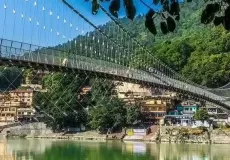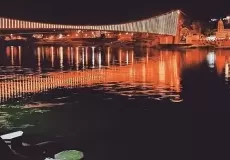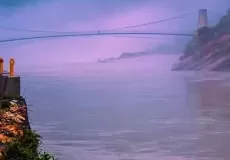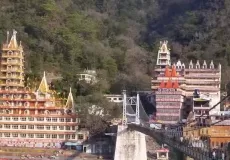



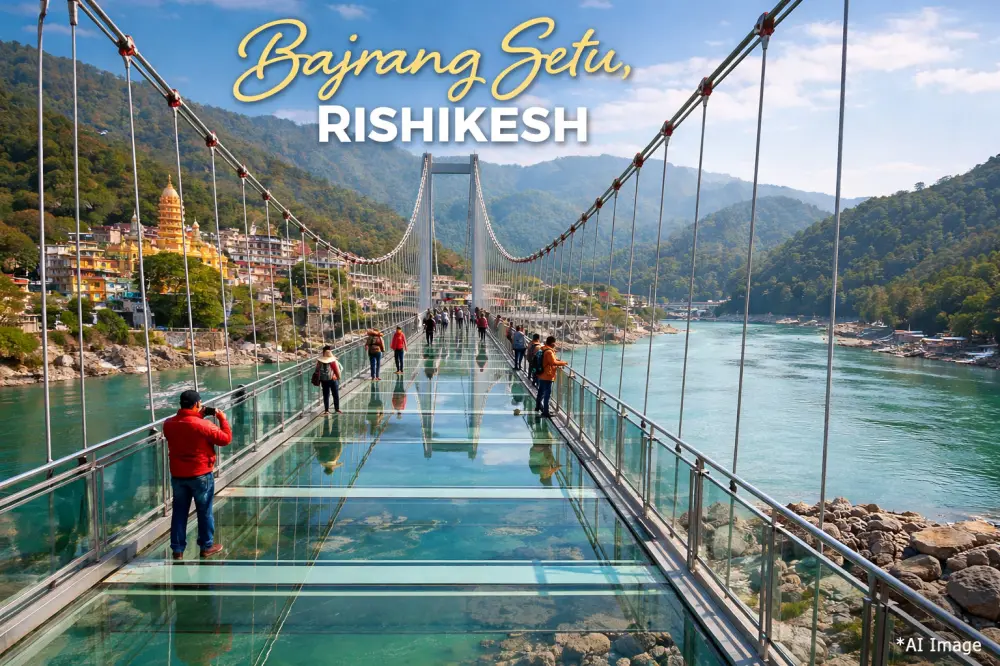
Bajrang Setu, popularly known as Janki Setu, is one of the newest and most important infrastructure landmarks in Rishikesh. Built to ease traffic congestion and improve connectivity across the Ganga, the bridge connects Tapovan with Swargashram–Ram Jhula area, offering both functional and scenic value.
The bridge has emerged as a vital alternative after the closure of the historic Lakshman Jhula, making it a lifeline for locals, pilgrims, and tourists.
Complete Travel Guide of Bajrang Setu with latest updates
Contact us for a free travel quote and itinerary for your travel plans.
For decades, Lakshman Jhula and Ram Jhula handled most pedestrian and vehicular movement in Rishikesh. However, after Lakshman Jhula was declared unsafe and closed in 2019, the need for a modern, load-bearing bridge became urgent.
Bajrang Setu was constructed to:
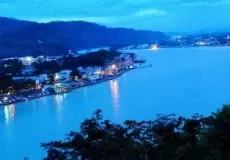
The bridge blends functionality with aesthetics, especially during sunrise and evening hours.
The new Bajrang Setu is designed as a modern suspension bridge with advanced features:
Bajrang Setu is set to become Uttarakhand’s first modern glass suspension bridge, promising to give Rishikesh tourism a fresh identity. The bridge will offer visitors from India and abroad a unique experience, allowing them to enjoy breathtaking views of the Ganga while walking across a world-class architectural marvel.
Blending contemporary design with deep cultural significance, Bajrang Setu is poised to emerge as a new landmark and symbol of Rishikesh. Its inauguration marks the close of an iconic chapter with Lakshman Jhula and the beginning of a new era for the spiritual city. By seamlessly combining tradition with modern engineering, the bridge will benefit locals and tourists alike, further strengthening Uttarakhand’s standing as a global tourism destination.
Bajrang Setu plays a crucial role in enhancing the tourism experience by providing smoother access to major attractions such as:
Its opening has significantly improved movement for tourists exploring both sides of the river without long detours.
The bridge is accessible throughout the year.
Travel Tips
Bajrang Setu is located in Tapovan, Rishikesh ( same location as of old Laxman Jhula).
By Road: Easily accessible from Rishikesh town
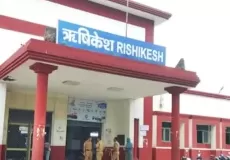
By Rail: Nearest station – Rishikesh Railway Station (4 km)
By Air: Nearest airport – Jolly Grant Airport, Dehradun (22 km)
Local autos and taxis are readily available for Bajrang Setu.
Q: Is Bajrang Setu the same as Janki Setu?
A: Yes, Bajrang Setu is also known as Janki Setu among locals.
Q: Is Bajrang Setu open for vehicles?
A: Yes, the bridge is open for two-wheelers, cars, pedestrians, and emergency vehicles.
Q: Why was Lakshman Jhula closed?
A: Lakshman Jhula was closed in 2019 after being declared structurally unsafe due to its age and excessive load.
Q: Is Bajrang Setu safe during monsoon?
A: Yes, Bajrang Setu is built with modern engineering standards and remains operational during the monsoon season, subject to weather advisories.
Q: Can tourists walk on Bajrang Setu?
A: Yes, pedestrian pathways are available, making the bridge popular for walking and photography.
Q: Does Bajrang Setu help decongest traffic?
A: Yes, the bridge has significantly reduced traffic congestion around the Ram Jhula and Tapovan areas.