Hemkund Sahib Ropeway Project
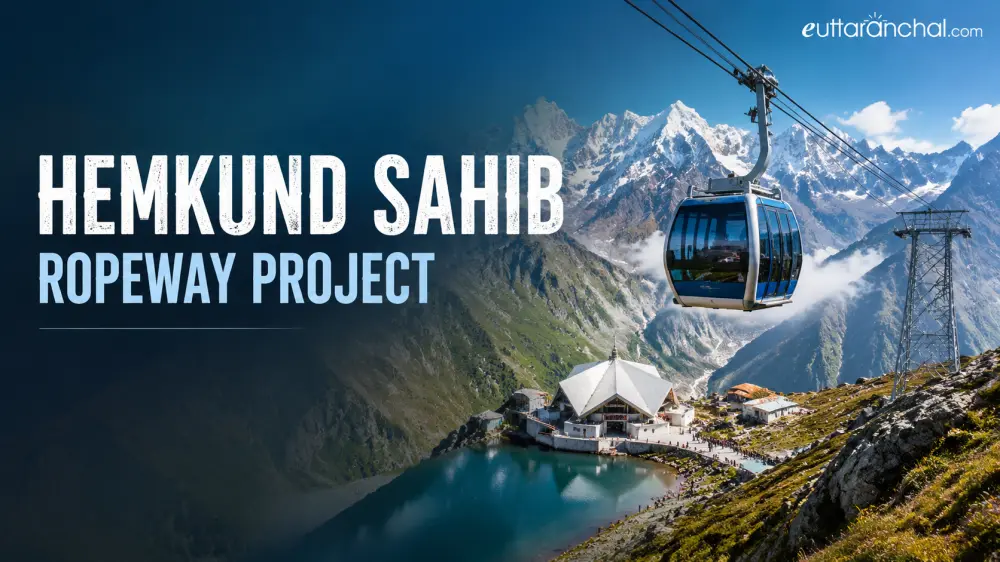
The proposed Hemkund Sahib Ropeway Project aims to provide a faster, safer and more convenient way to reach Hemkund Sahib, one of Uttarakhand's most revered Sikh pilgrimage destinations. Once completed, the ropeway will significantly reduce the travel time from Govindghat to Hemkund Sahib while minimizing the need for the strenuous uphill trek.
The project is being developed by the Government of Uttarakhand through the Uttarakhand Tourism Development Board (UTDB) and associated agencies. Besides improving accessibility for pilgrims, the ropeway is also expected to support tourism to the nearby Valley of Flowers National Park and strengthen the local economy.
Note: The Hemkund Sahib Ropeway is currently under development and is not operational. This page provides the latest available updates, project details and official announcements.
The Hemkund Sahib Ropeway is one of the flagship ropeway projects approved under the Government of India's Parvatmala Pariyojana (National Ropeways Development Programme). Once operational, it is expected to become one of the highest and most technologically advanced ropeway systems in India, improving year-round accessibility while reducing pressure on the existing trekking route.
Hemkund Sahib Ropeway Project Highlights
- Total ropeway length: Approximately 12.4 km.
- Approved under the National Ropeways Development Programme (Parvatmala Pariyojana).
- Estimated project cost: INR 2,730.13 crore.
- Proposed route: Govindghat – Bhyundar – Ghangharia – Hemkund Sahib.
- Will use Monocable Detachable Gondola (MDG) and Tricable Detachable Gondola (3S) technologies.
- Expected to significantly reduce travel time while improving passenger safety and comfort.
- Will improve accessibility for pilgrims, senior citizens and differently-abled visitors.
Development Phases of Hemkund Sahib Ropeway
The approved project to be developed in 2 phases:
Phase 1 shall be running from Ghangaria to Hemkund Sahib is being taken up for development in Phase I which is a single independent section.
Phase 2 comprises of three sections. The three sections between Govindghat and Ghangharia are connected with each other.
- Section I is between Govindghat & Bhiundhar;
- Section II is between Bhyundaar & Laxman Ganga bridge;
- Section III is between Laxman Ganga bridge and Ghangaria.
Proposed Ropeway Route
The proposed ropeway will begin from Govindghat and pass through Bhyundar Valley before reaching Ghangharia, the common base camp for Hemkund Sahib and Valley of Flowers. From Ghangharia, a separate section is planned to connect directly with Hemkund Sahib, eliminating the steep final climb for pilgrims.
Ropeway Technology
The project will use two different ropeway technologies depending on the terrain. The Govindghat to Ghangharia section is proposed to operate using Monocable Detachable Gondola (MDG) technology, while the steeper Ghangharia to Hemkund Sahib section will use Tricable Detachable Gondola (3S) technology. These systems are widely used in mountainous regions around the world for their stability, safety and ability to operate in challenging weather conditions.
Passenger Capacity
According to the approved project details, the ropeway is expected to carry thousands of passengers every day, greatly increasing the capacity to serve pilgrims during the annual Hemkund Sahib Yatra. The system is being designed to reduce congestion on the trekking route while providing safer and faster transportation.
Hemkund Sahib Ropeway Purpose
- Pilgrims currently travel by road from Govindghat to Pulna and then undertake a steep mountain trek via Ghangharia to reach Hemkund Sahib. The proposed ropeway is expected to make this journey much easier, particularly for elderly pilgrims and visitors with limited mobility.
- Pilgrims generally complete the journey within the permitted visiting hours, making an overnight halt at Ghangharia before trekking to Hemkund Sahib.
- The time of travel from Govindghat to Hemkund Sahib would reduce from 12 hours (and 2 days journey) to about 1.5 hours only by the proposed ropeway. It will help in increasing the number of tourists and pilgrims in the region, whether it is for Valley of Flowers or Hemkund Sahib.
- Elderly, children and disabled people, who have to climb the arduous trek, will be able to take safe and convenient travel to the holy place.
Benefits of the Hemkund Sahib Ropeway
- Reduces physical strain on pilgrims.
- Provides easier access for senior citizens and differently-abled visitors.
- Shortens travel time significantly.
- Supports sustainable tourism in the region.
- Expected to improve emergency response and evacuation capabilities.
- Boosts tourism-related employment in Govindghat and Ghangharia.
Current Project Status
The Hemkund Sahib Ropeway has received approval from the Union Cabinet under the Parvatmala Programme. The project will now proceed through detailed design, statutory clearances, land acquisition and construction before commercial operations begin. The official commissioning date has not yet been announced.
Latest Hemkund Sahib Ropeway Updates
11 April 2026: The Union Cabinet approved the development of the 12.4 km Govindghat to Hemkund Sahib Ropeway under the National Ropeways Development Programme (Parvatmala Pariyojana). The project will be developed on a Public-Private Partnership (DBFOT) model to provide all-weather connectivity for pilgrims and tourists.
March 2025: The approved project has an estimated cost of INR 2,730.13 crore. It will connect Govindghat to Ghangharia using Monocable Detachable Gondola (MDG) technology and Ghangharia to Hemkund Sahib using advanced Tricable Detachable Gondola (3S) technology.
Project Benefits: Once completed, the ropeway is expected to provide faster, safer and more convenient access to Hemkund Sahib and the Valley of Flowers, especially benefiting senior citizens, differently-abled pilgrims and families by reducing the need for the strenuous uphill trek.